Feb 5, 2026
Insights
4 min
Eterna's Insights - January 2026
To receive our Insights newsletter you can sign up here
Key Takeaways:
Crypto at Davos: From Sideshow to Center Stage
U.S. Crypto Market Structure Bill Stalls After Last-Minute Setback
BitGo’s IPO Signals Reopening of the Crypto Listings Window
Crypto at Davos: From Sideshow to Center Stage
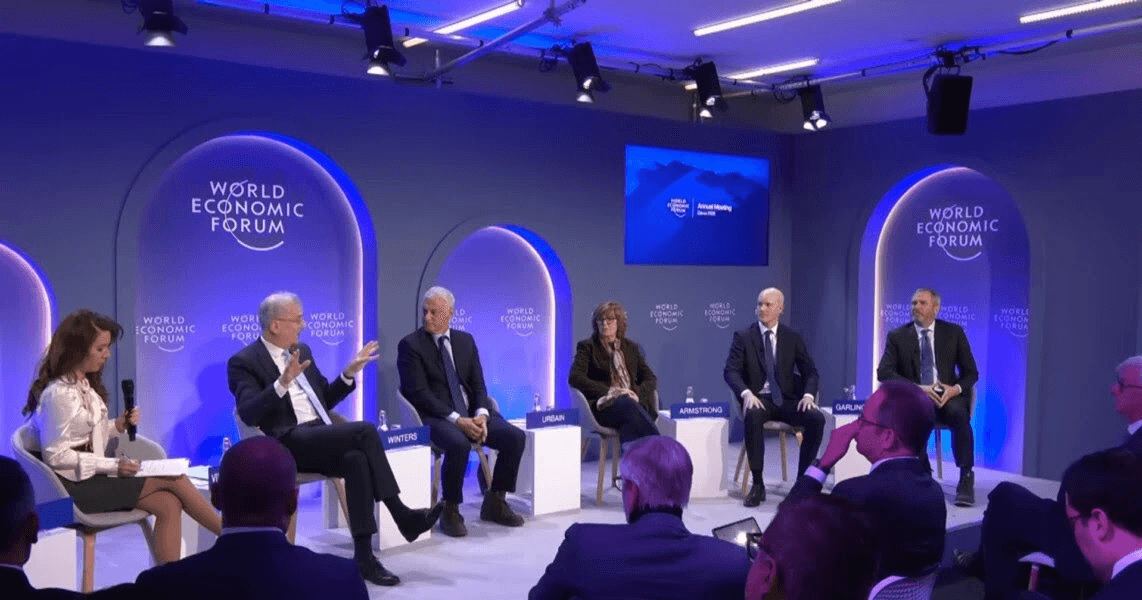
At this year’s World Economic Forum in Davos, crypto featured prominently in global policy and finance discussions, reflecting a marked shift from prior years. Senior industry figures such as Brian Armstrong (Coinbase’s CEO) and Jeremy Allaire (Circle’s CEO) appeared alongside traditional finance leaders including Larry Fink, with conversations focused less on whether crypto should exist and more on how it is being integrated into financial markets. The change in tone is notable when viewed over a short horizon: from skepticism and public dismissal in 2024, to cautious optimism in 2025, and now in early 2026 to discussions centred on implementation - spanning tokenization, stablecoins, prediction markets, and market structure legislation.
What stood out this year was how directly crypto was embedded in the official agenda. Sessions explicitly addressed tokenization and stablecoins as emerging components of financial infrastructure, with panelists framing them as tools for improving settlement efficiency, reducing costs, and expanding access rather than experimental concepts. This shift aligns with broader institutional narratives that digital assets are moving from pilot phases toward enterprise-grade deployment, supported by clearer regulatory signals and active engagement from global asset managers. Crypto no longer felt peripheral at Davos; it was treated as part of the core conversation shaping the future of financial markets.
U.S. Crypto Market Structure Bill Stalls After Last-Minute Setback
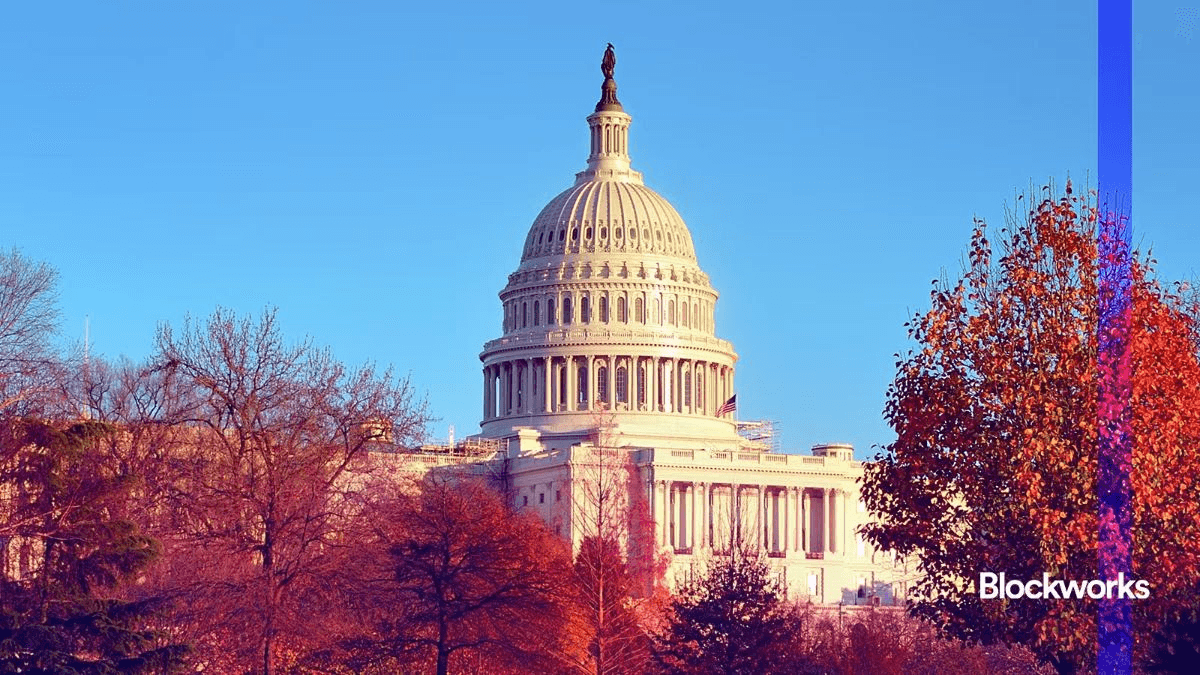
Efforts to advance a comprehensive U.S. crypto market structure bill stalled in mid-January, when Senate Banking Committee Chair Tim Scott postponed a key markup hearing just hours before it was scheduled to take place. The decision followed Coinbase publicly withdrawing its support for the bill, citing concerns around provisions affecting stablecoin rewards, tokenized securities, and DeFi. The setback came after an unusually compressed legislative process, with draft language released only days earlier and lawmakers facing a flood of amendments as industry feedback continued to evolve in real time.
The central point of contention was stablecoin yield. Proposed language would prohibit rewards paid simply for holding stablecoins, reflecting pressure from U.S. banking groups concerned about deposit competition. While compromise formulations were discussed, allowing rewards tied to activity rather than passive holding, these did not ultimately bridge the gap between crypto industry participants and a group of Democratic lawmakers and Republican holdouts seeking stricter limits. For parts of the industry, particularly stablecoin issuers and distribution platforms, the restrictions were viewed as structurally damaging, leading to the withdrawal of support that triggered the delay.
As of early February, the legislation remains unresolved. Discussions are expected to resume as committees return to work, with parallel efforts underway in the Senate Agriculture Committee and renewed coordination efforts expected from the White House. While the pause reflects the difficulty of aligning political, regulatory, and industry interests, it has not closed the door on passage. Codifying market structure at the federal level remains a priority for many stakeholders, even if the timeline has extended beyond what lawmakers initially hoped.
BitGo’s IPO Signals Reopening of the Crypto Listings Window
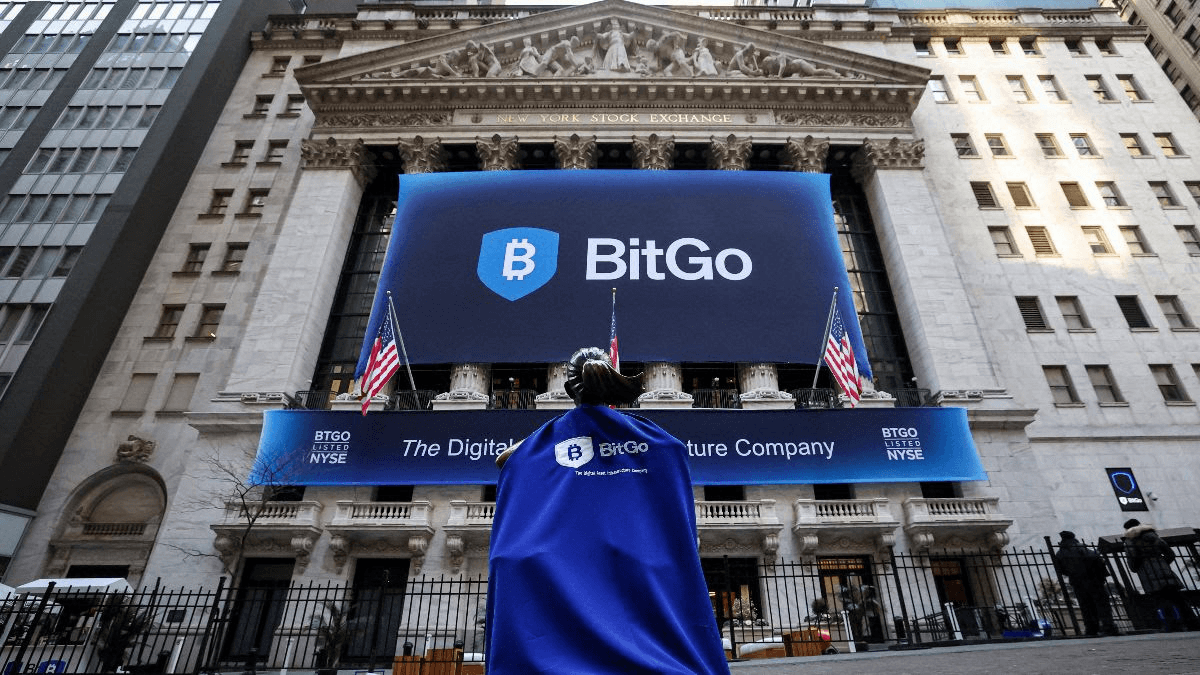
BitGo went public with a $2.59 billion valuation, marking one of the first major crypto IPOs of 2026 and a potential reopening of the public markets for digital asset firms. The listing follows regulatory progress late last year, when BitGo received approval to convert its state trust bank charter into a national trust bank charter, enabling it to operate across the U.S. under a single federal framework. This regulatory milestone strengthened BitGo’s positioning as an institutional-grade custody and infrastructure provider ahead of its public debut.
Market participants have framed BitGo’s IPO as an early test of investor appetite for crypto-related listings after a long drought. Unlike earlier cycles dominated by retail-facing exchanges, BitGo’s business is squarely focused on custody, settlement, and infrastructure for institutions, aligning more closely with traditional financial services models. If the stock trades well, it could pave the way for additional crypto infrastructure and fintech firms to access public markets in 2026, particularly those that can demonstrate regulatory clarity, recurring revenues, and systemically important roles within the digital asset ecosystem.

Solana Advances Its Consumer Strategy with Seeker
Solana Labs launched the Seeker token (SKR) alongside its second-generation crypto-native smartphone, Seeker. The device is built specifically for onchain use, with secure on-device key management, native wallet and payments support, and a Solana-first app store that bypasses Apple and Google’s distribution and fee structures. Seeker builds on the earlier Saga phone, but with meaningfully stronger early traction, reporting over 150,000 activated devices across more than 50 countries.
SKR sits at the core of the platform’s design. The token is used to stake and elect “Guardians” who verify devices, curate apps, and enforce platform rules, while developers post SKR to submit applications. Monetization is intentionally deferred, with fee capture positioned as a later-stage lever. More broadly, Seeker reflects Solana’s effort to extend beyond infrastructure and into consumer distribution, using hardware and token-based governance as a direct on-ramp for users and developers into the ecosystem.
Disclaimer: this newsletter was put together for informational purposes only based on our review and analysis. This should not be construed as a solicitation, offer, or recommendation to acquire or dispose of any investment or engage in any transaction.
Share this post