Nov 6, 2025
Insights
4 min
Eterna's Insights - October 2025
To receive our Insights newsletter you can sign up here
Key Takeaways:
ICE’s $2B Bet on Turning Prediction Markets into Data Infrastructure
Wall Street Opens the Floodgates: Major Banks Go All-In on Crypto Access
Crypto’s Black Friday: $19B Liquidations Expose Structural Weakness
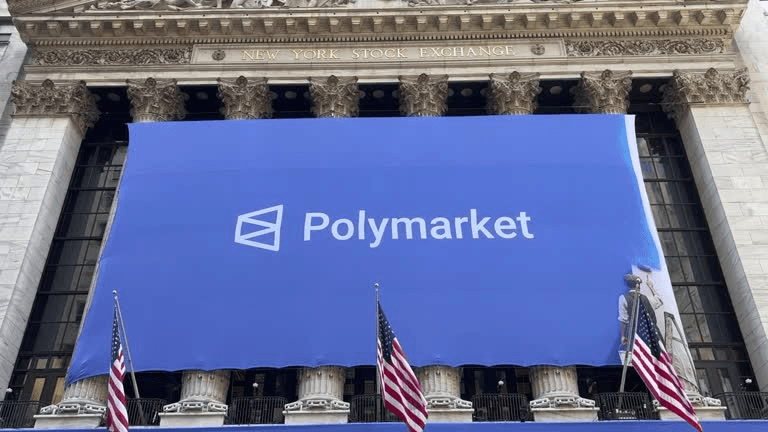
Wall Street Bets on Prediction Data: ICE’s $2B Move Turns Polymarket into an Information Powerhouse
Intercontinental Exchange (ICE), parent of the NYSE, has committed up to $2 billion in Polymarket, valuing the blockchain-based prediction platform at $8 billion. ICE will become a global distributor of Polymarket’s event-driven data, turning on-chain predictions into institutional-grade sentiment indicators, while also collaborating on tokenization initiatives. It’s the largest private crypto investment ever by a traditional Wall Street firm, highlighting growing conviction that prediction markets can evolve into a legitimate financial-data layer.
For Polymarket and founder Shayne Coplan, it’s a remarkable turnaround. Once under regulatory scrutiny, the company now enjoys Wall Street’s backing and is reportedly exploring a POLY token to strengthen governance and market resolution. Strategically, the deal reframes Polymarket as a collective-intelligence platform rather than a betting venue. ICE, whose $1.8 billion data business underpins much of global finance, appears ready to commercialize Polymarket’s continuous stream of real-time probabilities, transforming decentralized market sentiment into a new kind of institutional data product.

Wall Street’s Crypto Thaw: From Reluctance to Relentless Adoption
After years of hesitation, major U.S. financial institutions are embracing digital assets. On October 10, Morgan Stanley lifted long-standing restrictions on crypto funds, allowing advisors to recommend them across all client accounts. Its latest research suggests allocating up to 4% of portfolios to crypto - a notable endorsement for an industry once seen as fringe.
Vanguard, long a crypto skeptic, is reportedly preparing to list third-party crypto ETFs on its brokerage platform, reflecting both strong client demand and a more supportive regulatory climate. Meanwhile, Citi plans to launch institutional-grade crypto custody by 2026, and JPMorgan will soon enable clients to trade bitcoin and other tokens internally. The message is clear: the world’s largest banks are no longer asking if crypto belongs in mainstream finance, they’re competing on how fast to integrate it.

Crypto’s Black Friday: Leverage, Oracles, and Binance Expose Cracks in Market Infrastructure
The October 10 sell-off, now dubbed “Crypto Black Friday”, erased $19 billion in leveraged positions within 24 hours. Triggered by sudden 100% tariffs on Chinese tech imports, the shock sent Bitcoin below $105k and Ether down nearly 15%, exposing fragility in crypto’s market plumbing. As automated deleveraging (ADL) cascaded across exchanges, correlated margin pools deepened losses and froze liquidity across perpetual futures markets.
The event also reignited debate around oracle reliability. Several DeFi platforms reported price lags of up to 30 seconds, leading to mis-liquidations, while Binance, the largest derivatives venue, faced scrutiny for inconsistent risk controls and halted order books. Together, these breakdowns underscored that leverage, data integrity, and exchange centralization remain tightly linked risks - magnifying volatility in ways that traditional markets have largely engineered out.

The Altcoin ETF Horde Arrives: Solana Leads the Next Wave of Institutional Crypto Access
On October 28, three altcoin ETFs debuted in the U.S., marking crypto’s next mainstream chapter. Bitwise’s Solana Staking ETF (BSOL) dominated, attracting $150 million in its first three days, the biggest ETF launch of 2025. Canary’s Hedera (HBAR) and Litecoin (LTCC) ETFs saw smaller inflows, but all benefited from a pre-shutdown SEC rule change enabling automatic approval after 20 days.
Following Grayscale’s new staking features for its Ethereum products and GSOL’s uplisting, Solana is now firmly established as the third institutional-grade blockchain alongside Bitcoin and Ethereum. With 115 crypto ETFs now trading in the U.S. including 25 single-asset spot products, altcoins are moving from speculative corners to regulated, investable asset classes.

The Shift to Programmable Money: Stablecoins and x402 Blur the Line Between TradFi and Web3 Payments
Traditional payments and crypto are converging fast. Western Union announced its U.S. Dollar Payment Token (USDPT) on Solana, with Anchorage Digital handling issuance and custody. Integrated into Western Union’s Digital Asset Network, the stablecoin could bring on-chain dollars to 100 million users across 400,000 locations by H1 2026, potentially the largest consumer stablecoin rollout yet. Visa also plans to support four stablecoins on four blockchains, while Mastercard is reportedly in talks to acquire Zerohash, further cementing big payments’ pivot into crypto rails.
On the crypto-native front, Coinbase’s x402 protocol, a permissionless payments framework built on HTTPS surged back into focus. Designed for AI-driven, programmable payments, x402 saw activity skyrocket in late October, with transactions jumping from under 200k to over 2 million. While speculative, the momentum underscores a growing shift toward AI-enabled finance and autonomous payments systems. Together, USDPT and x402 illustrate the arrival of programmable money at scale, where Web3 innovation merges with the reach of global payment networks.
Disclaimer: this newsletter was put together for informational purposes only based on our review and analysis. This should not be construed as a solicitation, offer, or recommendation to acquire or dispose of any investment or engage in any transaction.
Share this post